COP31: A Bewildering Finale
COP31: A Bewildering Finale
By Houmi Ahamed
Originally scheduled to end on Friday evening, COP31 concluded on Sunday at around 7:30 pm. A record. It wrapped up nearly 50 hours past its scheduled finish. The backdrop was tumultuous. Events took a bewildering turn. Several texts were adopted, including the Just Transition Work Programme and decisions on adaptation. However, the conference ended with the rejection of key texts: the cover decision and the Mitigation Work Programme.
Palpable tension
“All issues have been addressed. The text was developed on the basis of consensus. The decision emerging from this room shows a conclusive outcome,” COP31 President Murat Kurum nevertheless declared. He spoke right at the opening of the closing plenary.
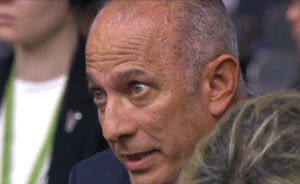
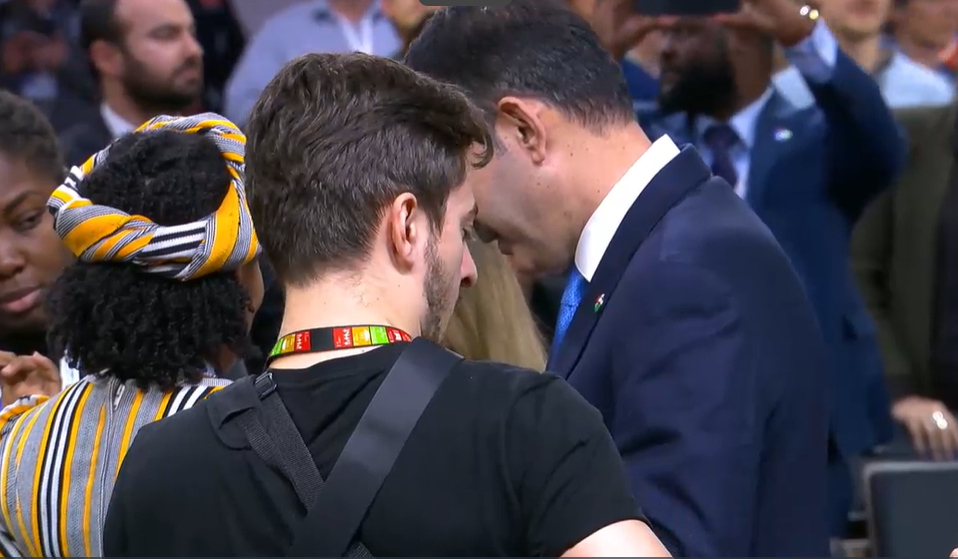
But the tension was immediate. His aides appeared unsettled. Several tried to speak with him. His demeanor was hard to read. He did not seem willing to listen. A visible stir swept across the dais. He even asked the Executive Secretary of the Convention to sit back down after the latter had walked over to speak with him. The bitter divisions that had built up since Friday could be felt throughout the hall.
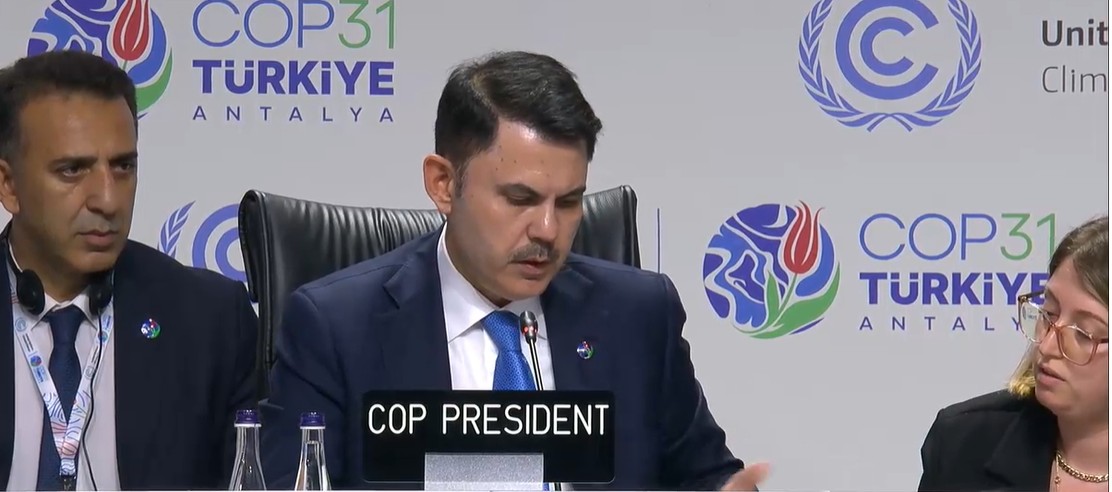
The final text, the cover decision, faced staunch opposition. Several delegations had been pushing back against it for hours. Two texts were put forward for consensus. Together, they formed the “Antalya Pact.” This pact comprised two decisions: one under the COP, and the other under the CMA, the meeting of the Parties to the Paris Agreement. Draft texts had been released late into the night.
The context
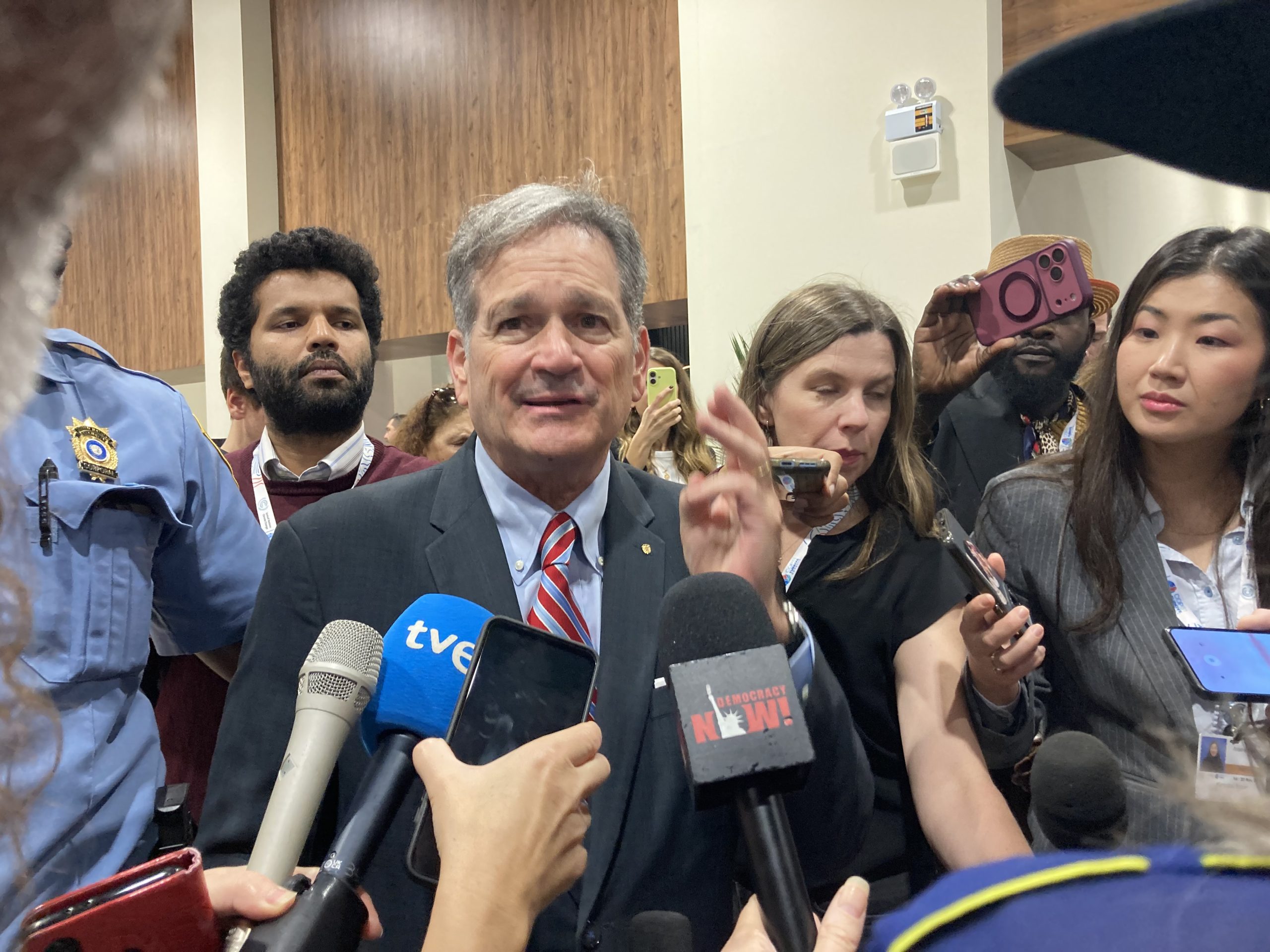
Published at 2:00 am, the third draft sparked concern in Antalya. Breaking points had already begun emerging on Friday, the scheduled closing day. Panama’s Environment Minister gave several interviews that afternoon to spell out his red lines. Earlier that morning, he had joined a press briefing alongside other ministers to stress the urgency of transitioning away from fossil fuels.
What unfolded in the plenary came as no surprise to seasoned observers. From the outset, the European Union (EU) had insisted on clear language. It wanted a phase-out of fossil fuels. It also demanded adherence to the 1.5°C threshold set by the Paris Agreement.
However, that wording was missing from the draft. The 27-member bloc rejected it outright. “We reject the cover text,” the Irish representative stated on behalf of the EU, before detailing the reasons why. Behind closed doors, a financial battle pitted developing countries against developed nations. Developing countries viewed the accounting of climate finance as lacking transparency.
A bizarre turn of events
In the plenary, the COP31 President brushed aside the EU’s intervention with a wave of his hand. He ruled that it was not the time to debate the matter, saying the moment would come later in the session.
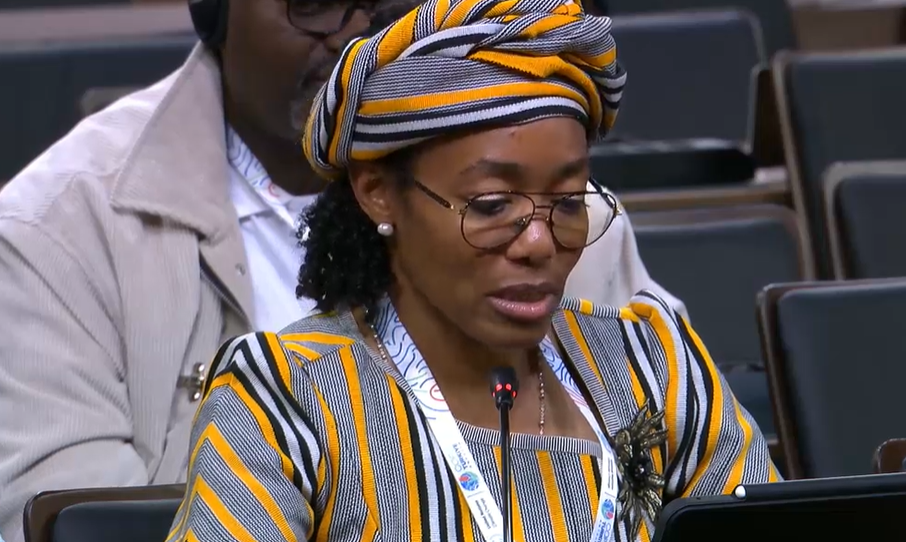
A few minutes later, Ghana took the floor, speaking in its capacity as chair of the African Group of Negotiators (AGN). Ghana’s Environment Minister, Zanetor Agyeman-Rawlings, began her statement, only to be swiftly interrupted by the COP31 President. The unprecedented move immediately rattled the room.
Later, Panama lodged a formal objection to the text, calling the backsliding unacceptable. The delegation pointed to three major flaws. First, the draft failed to bridge the gap with science. Second, it relied too heavily on carbon capture, utilization, and storage (CCUS), sidelining real systemic change, while its electrification initiative lacked a clear anchor in renewable energy. Finally, the text weakened commitments made at previous COPs.
Rejected solutions
The repeated criticism from the EU and Panama exposed a deeper tension over how the text was drafted. On paper, the draft acknowledged the gap with the 1.5°C pathway. It highlighted the rapid depletion of the carbon budget. It cited the role of methane among greenhouse gases and proposed technological solutions. The EU and Panama rejected those solutions. Notably, the text cited a collective electrification target of 35%—without specifying the source of that electricity.
For the EU and Panama, such language fell short and signaled a step backward. An explicit reference to transitioning away from fossil fuels was missing, and the operational measures failed to match the scientific urgency.
Immediately after this firm stance, Russia took the floor. Moscow defended the African continent in its own way, noting that 655 million people still live without electricity. Russia denounced the lack of local value addition, pointing out that Africa reaps little benefit from its own minerals, such as cobalt. Moscow backed the text while attacking the European Union—a strategic rhetorical alignment, observers noted.
Rushed procedure
“I note with extreme disappointment that when another Party was speaking on the framework decision, the delegate was allowed to speak without interruption, whereas I was abruptly cut off during my statement by Your Excellency. This is an example of the level of disrespect we have endured,” the African Group representative said, taking the floor again to rebuke Kurum’s conduct.
Ghana’s lead negotiator had already weighed in. Antwi-Boasiako Amoah chairs the African Group of Negotiators. “This is a breach of the Convention’s code of conduct and a disregard for procedure by the presidency,” he had stated.
The first part of the plenary descended into chaos. Bewilderment was widespread. Several delegations voiced support for the text, including China, Saudi Arabia speaking for the Arab Group, and the Like-Minded Developing Countries (LMDC). Conversely, the Small Island Developing States (SIDS, or AOSIS) rejected the cover decision. The “Antalya Pact” failed to be adopted for lack of consensus.
A calmer atmosphere
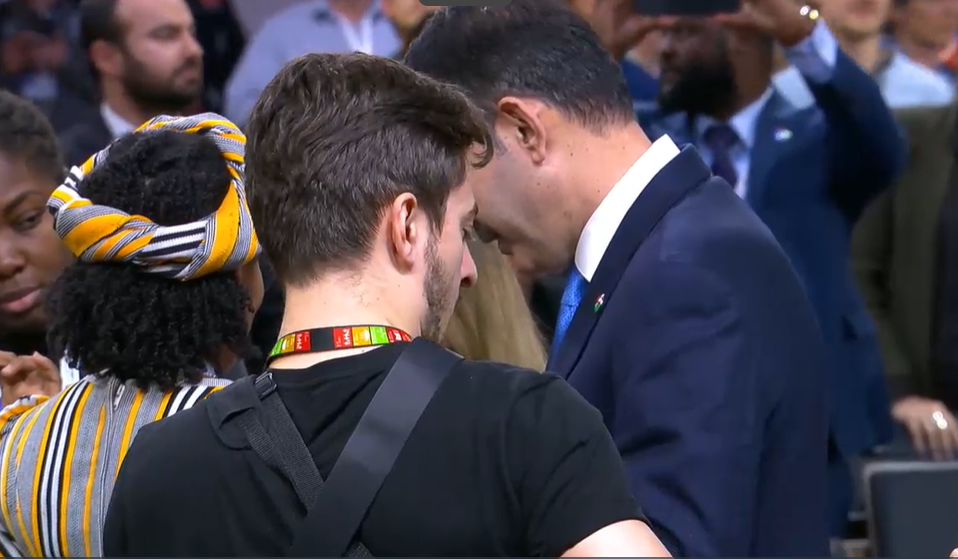
The second part of the plenary proceeded more calmly. While the cover decision had failed, attention shifted to the remaining texts. The session opened with a symbolic moment bringing together Murat Kurum and Ghanaian Minister Zanetor Agyeman-Rawlings. Returning to the podium, the COP President issued a public apology.
During national statements, Fiji called for standalone consideration of the ocean. Landlocked developing countries also demanded a separate decision on mountains. Nepal, recently struck by a major natural disaster, made a formal request to that effect.
In her remarks, Zanetor Agyeman-Rawlings accepted the COP31 President’s apology. She also confirmed her group’s endorsement of the Just Transition text, while noting its shortcomings. Still, the African Group had championed the preservation of multilateralism from the start.
For Ghana’s representative, the Just Transition Work Programme is “very important.” Speaking for the African Group, she welcomed the progress made while calling for greater inclusion. “Discussions have moved forward so far, though not in the best interest of the continent. We hope the next phase of talks on just transition will delve deeper into the core issues facing developing countries,” she said.
Addressing concerns
The text emphasizes equity and science. It addresses the linkages between mitigation and adaptation, and covers national planning, finance, and social protection. Parties ultimately adopted it. Decisions on the Global Goal on Adaptation and the Adaptation Fund were also adopted.
Small Island Developing States (SIDS) accepted the compromise on just transition despite its gaps. “We recognize that this text is not perfect, and SIDS have concerns regarding areas that need improvement. However, in order to advance our progress and in a spirit of collaboration, we have shown flexibility at this late stage to secure an outcome we can work with,” their representative explained. She also underscored a key point: any transition must remain “anchored in the intrinsic link to the 1.5-degree goal.”
On the overarching cover decision, however, the divide persisted. The African Group backed its adoption, whereas Least Developed Countries (LDCs) and SIDS maintained their opposition, even though a large share of LDCs are African nations. According to observers, this refusal did not call into question their commitment to multilateralism; rather, LDCs were rejecting a text they deemed far too weak.
Transparency
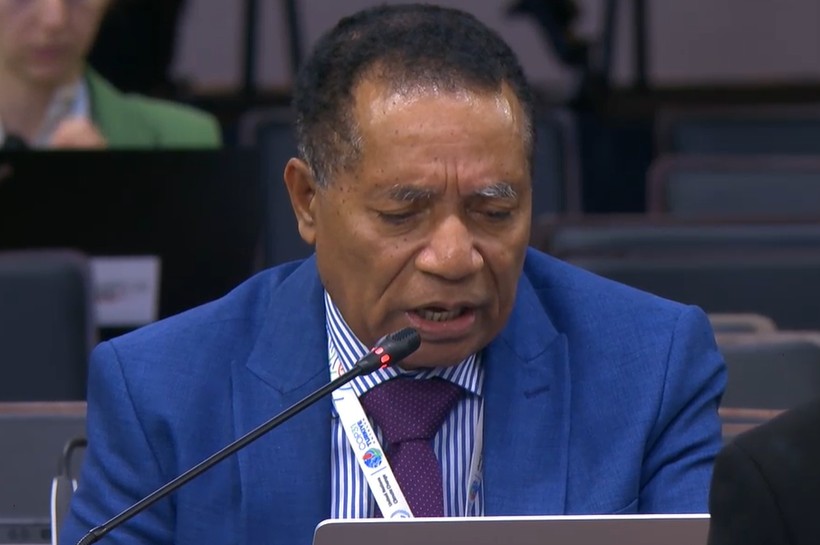
The LDCs’ refusal was accompanied by pointed criticism over the lack of transparency and fairness in how the negotiations were conducted. “Consensus is not simply about securing an agreement in the room. It is about ensuring that all Parties have had a fair opportunity to shape that agreement,” Adão Soares Barbosa, minister of environment of Timor Leste, the LDC chair reminded the plenary. On substance, the group judged the decision weak on adaptation finance. It lamented that the promised tripling of funds had been reduced to “a mere process rather than a concrete outcome,” with no baseline year and no specific figures. The group also deplored an inadequate response to the overshoot of 1.5°C.
On a technical level, the draft text released at 2:00 am did contain specific provisions on transparency. It acknowledged the operationalization of the Enhanced Transparency Framework as of November 17, 2026, and invited Parties to submit expected elements by December 31, 2026. The text recalled paragraphs on financial and technical support as well as capacity-building, and proposed reviewing these matters in Bonn in June 2027 as part of the first review and update of the rules. The document also reiterated the requirement for environmental integrity, citing transparency under Article 6 on carbon markets.
A clear communication gap thus emerged—pitting the monitoring mechanisms written into the text against the sense of procedural opacity denounced by vulnerable delegations.
On finance and historical responsibility
This third draft deferred key decisions on adaptation finance. Specifically, the Antalya text tasked UN finance experts with a mandate: the Standing Committee on Finance is to propose different calculation methodologies ahead of the November 2027 climate conference.
Estimating financial needs is not enough; negotiators must define how to calculate their tripling by 2035. Behind closed doors, negotiators stressed that estimated figures do not constitute an official baseline. This delay weighed all the more heavily given that the draft itself acknowledged historical responsibility and financing obligations.
At its second press conference, the European Union pressed its point. It wanted to see additional financial contributions—aiming squarely at emerging economies, without naming them.
The text framed the debate around historical responsibility. It also recalled developed countries’ pre-2020 shortfalls, noting they had failed to meet the IPCC target of reducing emissions by 25% to 40% below 1990 levels by 2020. The draft reaffirmed that developed countries must take the lead and accelerate the implementation of Nationally Determined Contributions (NDCs). It reiterated Article 9.1 on developed countries’ obligation to provide finance, incorporated Article 9.2 on voluntary contributions from other Parties, and cited Article 4.5, which links support to enhanced ambition.
For LDCs and vulnerable countries, those reminders were not enough. They did not make up for the lack of immediate financial guarantees. The deferral to 2027 weighed heavily.
Facing unfulfilled promises
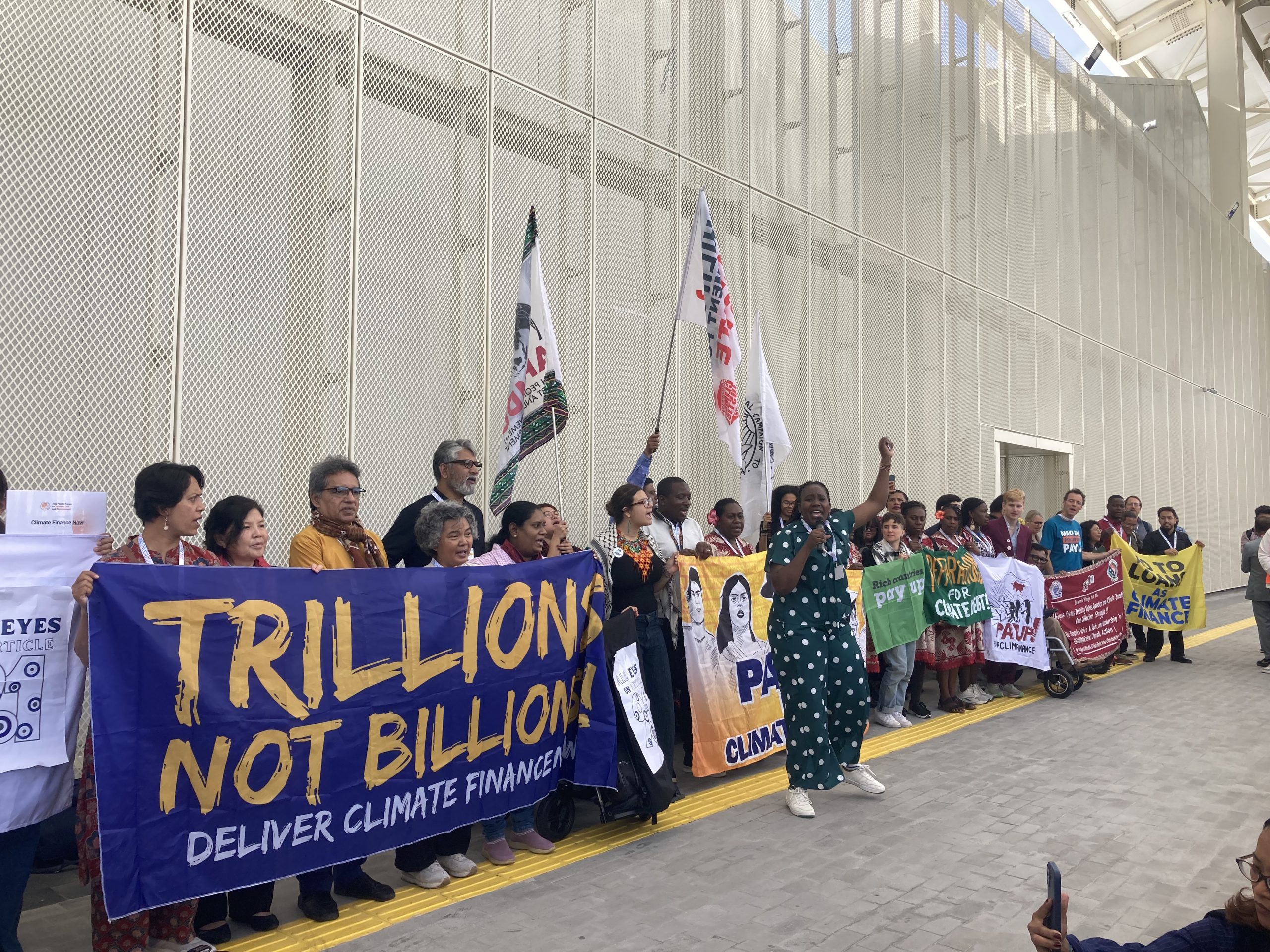
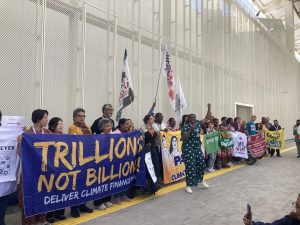
Among civil society, the absence of concrete guarantees sparked strong reactions. Mattias Söderberg of DanChurchAid criticized the failure to deliver on past pledges. “Last year, vulnerable countries were promised a tripling of adaptation finance. Today, they want to know how that promise will be kept. That is an entirely legitimate demand. Another round of meetings and reports will not protect people from floods and droughts,” he explained.
Söderberg also pointed to an overall rollback in ambition and voiced concern over the scientific timeline. “The COP31 presidency worked hard to find a compromise, but the price paid was high. Important commitments were watered down, and some simply disappeared. We are heading toward a world exceeding 1.5°C, and we urgently need stronger climate action, not scaled-back promises,” he warned. He also called it “unacceptable” to risk delaying the next IPCC assessment cycle.
“This risks forcing governments to make some of the most consequential climate decisions of our time without the most up-to-date scientific data,” he noted.
For the Danish campaigner, one step forward deserved recognition: the mobilization of alternative resources. Opening the door to new funding avenues was among the solutions put forward. He cited “levies on private jets and other high-carbon luxury activities”—measures that, in his view, could help channel funds into mechanisms such as the Loss and Damage Fund.
Access to energy
For African civil society organizations, climate finance is inseparable from access to energy. In a statement released at the close of the negotiations, the African Coalition for Sustainable Energy and Access (ACSEA) demanded that the continent’s energy transition be funded through public finance in the form of grants. The organization urged African governments to begin preparing immediately for the next milestone: COP32 in Addis Ababa. “Antalya must not become the point where the world scales back its ambition. It must be the moment when energy justice is finally recognized as inseparable from climate justice,” said Augustine B. Njamnshi, Executive Director of ACSEA.
That concern echoed the deadlock over the Mitigation Work Programme (MWP). For two weeks, developing countries fought to save the mechanism, whose mandate expires at the end of 2026. “This is the final year. If there is no agreement, it means it will disappear,” Malang Sambou Manneh, a Gambian negotiator and co-founder of the Mbolo Association, had warned. On paper, states supported continuing the programme. Yet talks stalled over timelines, the binding nature of targets, and allocated financial resources. For lack of consensus, the text was not adopted, observers reported.
Looking ahead
For ACSEA, this deadlock illustrates the limits of commitments without means. Setting global electrification targets or calling for an energy transition is not enough as long as millions of Africans remain without electricity and public financing is lacking.
“A just energy transition cannot mean asking Africa to abandon the energy pathways that enabled others to develop without giving it the means to build a better alternative,” said Augustine B. Njamnshi. He added: “We need a transition that cuts emissions, ends energy poverty, and builds industries and jobs on African soil. Without access, without finance, and without policy space, the word ‘just’ loses all meaning.” For the organization, global electrification ambitions only make sense if backed by concrete investments in generation, grids, mini-grids, and clean cooking.
Following the failure to adopt the “Antalya Pact” and the Mitigation Work Programme, Murat Kurum brought the session to a close on Sunday evening—doing so with evident frustration. “I leave what has happened here—the stalled negotiations and the processes—to the judgment of the entire world and of humanity,” he stated. Parties are set to reconvene in Bonn in June 2027, before gathering in Addis Ababa for COP32.