COP31: Is the Paris Agreement Threatened?

COP31: Is the Paris Agreement
The final hours of the 31 UN Climate conference are approaching. The presidency is holding its ground. “The commitment to transition away from fossil fuels was made at COP28. We are not erasing it,” insists the Convention’s Executive Secretary, Simon Stiell, while pointing out the sheer scale of the 165 mandated agenda items among nearly 200 countries. Still, he aims to reassure: “The transition has begun. It is irreversible. Today, for every dollar invested in fossil fuels, two dollars are invested in renewables.”
Open letter
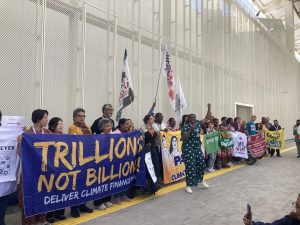
Nevertheless, civil society and even some delegates remain unconvinced. Panama sent an open letter to the presidency threatening to reject the final text if ambition is not significantly raised, deeming the current approach highly insufficient, particularly regarding the phase-out of fossil fuels.
Just minutes before the press conference this Thursday afternoon at 4:00 p.m., the second draft text was released. It highlights electrification (“35 by 35”), renewables, energy efficiency, oceans, methane, and science. However, it removes any explicit mention of phasing out fossil fuels, fails to specify “clean” electrification, and leaves key demands on adaptation finance and a just transition unresolved.
Financing the transition
Hajar El-Beltagy was interviewed a few minutes before the publication of the second draft cover decision. In her view, negotiations on the just transition mechanism have hit a dead end. Nevertheless, she notes a united front among Global South countries (G77 + China, the African Group, the Arab Group, and the LMDC). Together, they are calling for the creation of a permanent body under the authority of the CMA. It must be equipped with genuine means of implementation. “Financing the transition, providing technology, and building capacities,” she explains.
However, the Egyptian consultant and activist denounces the obstruction from the European Union, Canada, Japan, and Norway. “They want to merge the two mechanisms, which would dilute the just transition mechanism,” she criticizes. She considers the Turkey–Australia co-presidency overly accommodating toward developed countries. During Thursday’s press conference, the two co-presidents defended themselves, reiterating their goal: to reach a consensus overnight.
Keep 1.5°C alive?
The negotiations’ co-president, Chris Bowen, defends the 35% electrification target. This goal would be paired with tripling renewables and doubling energy efficiency. It is seen as a lever capable of covering two-thirds of the ground needed to keep 1.5°C within reach by 2035.
Since the start of the negotiations, the Australian Minister for Energy has highlighted the plight of small island states, while also affirming his support for the Pacific Islands. On Thursday, he stated that he was placing oceans at the heart of the draft agreement. “Every dollar invested in the ocean yields more than five in return,” he argued, reminding everyone that the ocean is the planet’s primary climate regulator. Yet, in the current text, phasing out fossil fuels is not explicitly mentioned.
An implementation mechanism
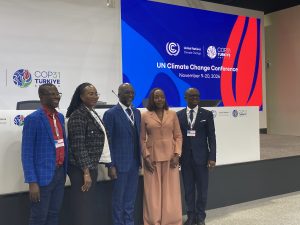
Interviewed a few minutes after the COP31 presidency’s press conference, the lead African negotiator refused to integrate non-negotiated presidential initiatives into the official text. “This is a Party-driven process, and we do not want external initiatives disrupting the rules we have all agreed upon,” warned Nana Antwi-Boasiako Amoah.
Accompanied by three expert negotiators in finance, adaptation, and mitigation, the group is advocating for an implementation mechanism to bring African Nationally Determined Contributions (NDCs) to life. However, it demands predictable, accessible financing provided in the form of grants by developed countries.
The group reaffirms its commitment to the Paris Agreement and the United Nations Framework Convention on Climate Change. It firmly supports the work of the IPCC as well as other credible scientific sources. Finally, it denounces the hypocrisy and double-speak of major hydrocarbon producers.
A clear roadmapt?
For COP31 President Murat Kurum, however, the roadmap is clear. He defends the “35 by 2035” target included in the draft and voices political support for tripling adaptation finance by 2035, as well as rapid access to funds. Yet observers point out that the text itself still sets no quantified commitment on this front. Kurum also highlights early warning systems by 2027 and methane reduction. He further emphasizes the “Zero Waste” program, biomethane, and the protection of glaciers and oceans. Still, the Turkish Minister of Environment makes a clear-eyed observation: eleven years after the Paris Agreement, keeping warming below the 1.5°C threshold is becoming increasingly difficult.
Present in Antalya for two weeks, Monique Barbut, the French Minister for Ecological Transition, gave the text a nuanced reception. For the French representative, there is a lack of clarity. The 35% electrification target by 2035 is not sufficiently defined, she stated during a press briefing. She regrets the lack of reference to “clean” electrification based on renewables and low-carbon energy (a term referring to nuclear power).
“You can never stop”
The minister criticizes what she views as an excessive focus, carrying “monstrous” costs, on carbon capture and storage. She also deplores the disappearance of the fossil fuel phase-out. Faced with announcements of increased oil production from Presidents Trump, Putin, and Xi, she reacts pragmatically while recalling that “oil belongs beneath our feet.”
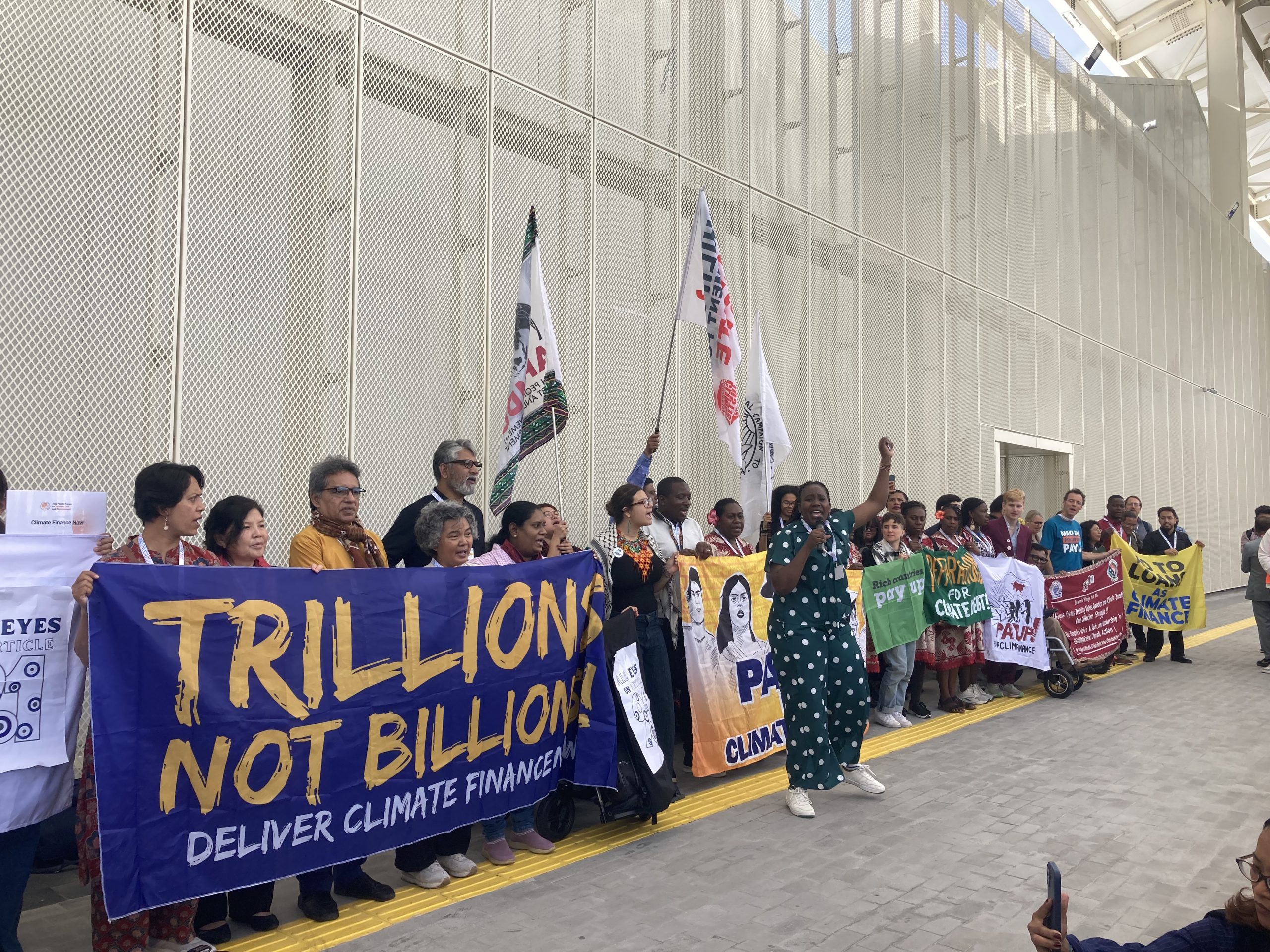
On the other hand, she considers the finance section to be “roughly balanced.” That self-congratulatory assessment has drawn sharp criticism from NGOs and developing countries, who instead accuse Paris and the European Union of blocking increased funding for adaptation and denounce a text that falls far short of their needs.
This draft text, the chair of the African Group nevertheless reminds us, is not final. “In negotiations, you can never stop at the first or second draft, because a lot can still change starting tonight,” he concludes.
By Houmi Ahamed, in Antalya