COP31: Will the Divan Prevail Over the Finance Battle?

COP31: Will the Divan Prevail Over the Finance Battle?
By Houmi Ahamed, in Antalya
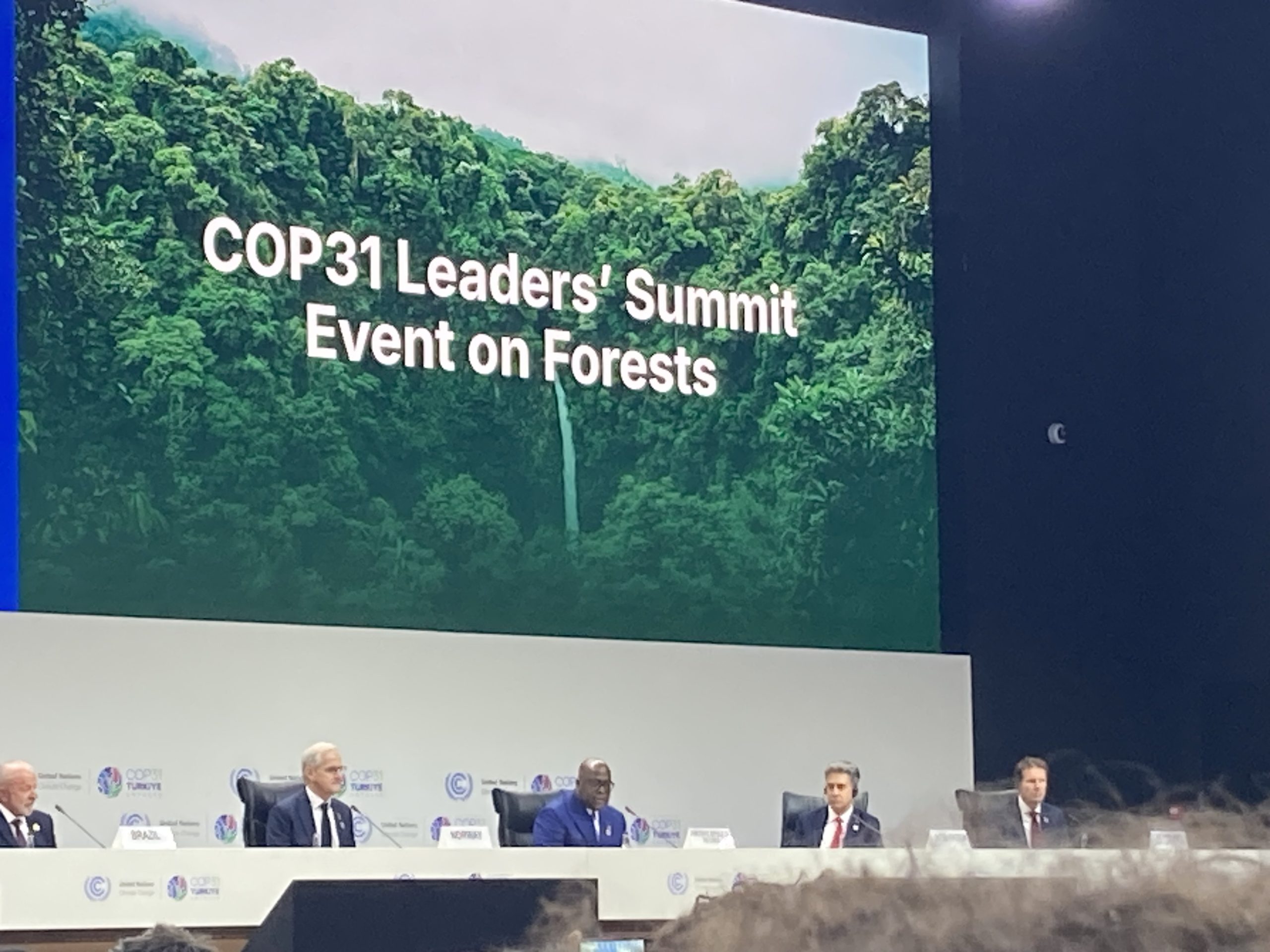
The Turkish-Australian presidency turned on Wednesday to a centuries-old Ottoman state practice to break the diplomatic deadlock in Antalya. Nevertheless, bitter clash over climate finance, among other sticking points, remains unresolved. The two COP31 presidents sought on Wednesday to bridge growing rifts across the technical negotiating rooms. To this end, COP31 President Murat Kurum and Negotiations President Chris Bowen established the “COP31 Divan.”
What is it? Drawing directly on Turkish history, the name refers to the Divan-ı Hümayun, the 15th-century Ottoman Imperial Council. In the Ottoman Empire, diplomacy, finance, administration, and justice were weighed collectively rather than in silos. As such, this informal ministerial-level assembly was designed to map out a balanced landing zone for the Conference’s final package.
Beyond Red Lines
At COP1, the Divan is open to ministers, chairs of negotiating groups, and observer constituencies. It aims to move delegations beyond pre-scripted red lines and identify room for cross-cutting compromises.
“What we need at this stage is not so much to repeat our respective positions, but rather to identify where we can move forward together,” Kurum told delegates during the session.
“As we approach the final days of COP31, let us bring the spirit of the Divan to life in our discussions here. Let us listen to one another, broaden our common ground, and translate what is possible into concrete results,” he urged on Wednesday.
Bowen, for his part, stated his desire to ground ministerial consultations in tangible economic realities, exhorting parties to “build on common ground.” The COP31 presidency also underscored the need to deliver an ambitious, balanced, and practical message to the world. The Australian Minister for Climate Change and Energy noted that the world expects a response to both climate imperatives and the energy and cost-of-living pressures facing households globally.
The Adaptation Fund Crisis
However inside the conference halls, the spirit of collective counsel collided head-on with an acute financial reality. Just hours before the Divan convened, ministers held their annual high-level dialogue on the Adaptation Fund. The session laid bare a stark gap. Donor pledges fell far short of what vulnerable nations actually need.
For the third consecutive year, the Adaptation Fund missed its resource mobilization target—and this time, the shortfall is stark. New pledges announced on Tuesday evening totaled roughly $50 million. “The pledges were the lowest in history, across all years,” said Brandon Wu of ActionAid USA during a Climate Action Network (CAN) press conference on Wednesday morning. His colleague, Pooja Dave, added: “The sum does not even reach 25% of the fund’s already modest mobilization target.”
Most contributions came from a handful of European donors. Spain pledged €25 million, Germany €10 million, and Ireland €6 million.
Developing nations and civil society pushed back hard against the shortfall. They faulted the absence of a mandatory replenishment cycle. According to the Chair of the Fund’s Board, Kenya’s Ali Mohamed, donors can still contribute even after the COP concludes.
However, budget decisions in donor countries remain subject to annual parliamentary votes or domestic procedures, complicating commitments to automatic mechanisms.
France, represented by Minister Monique Barbut, came under heavy fire. NGOs and negotiators accused Paris of blocking climate finance. Interviewed by the online newspaper L’Opinion, the minister stated that emerging economies must also contribute.
“50 million dollars was pledged”
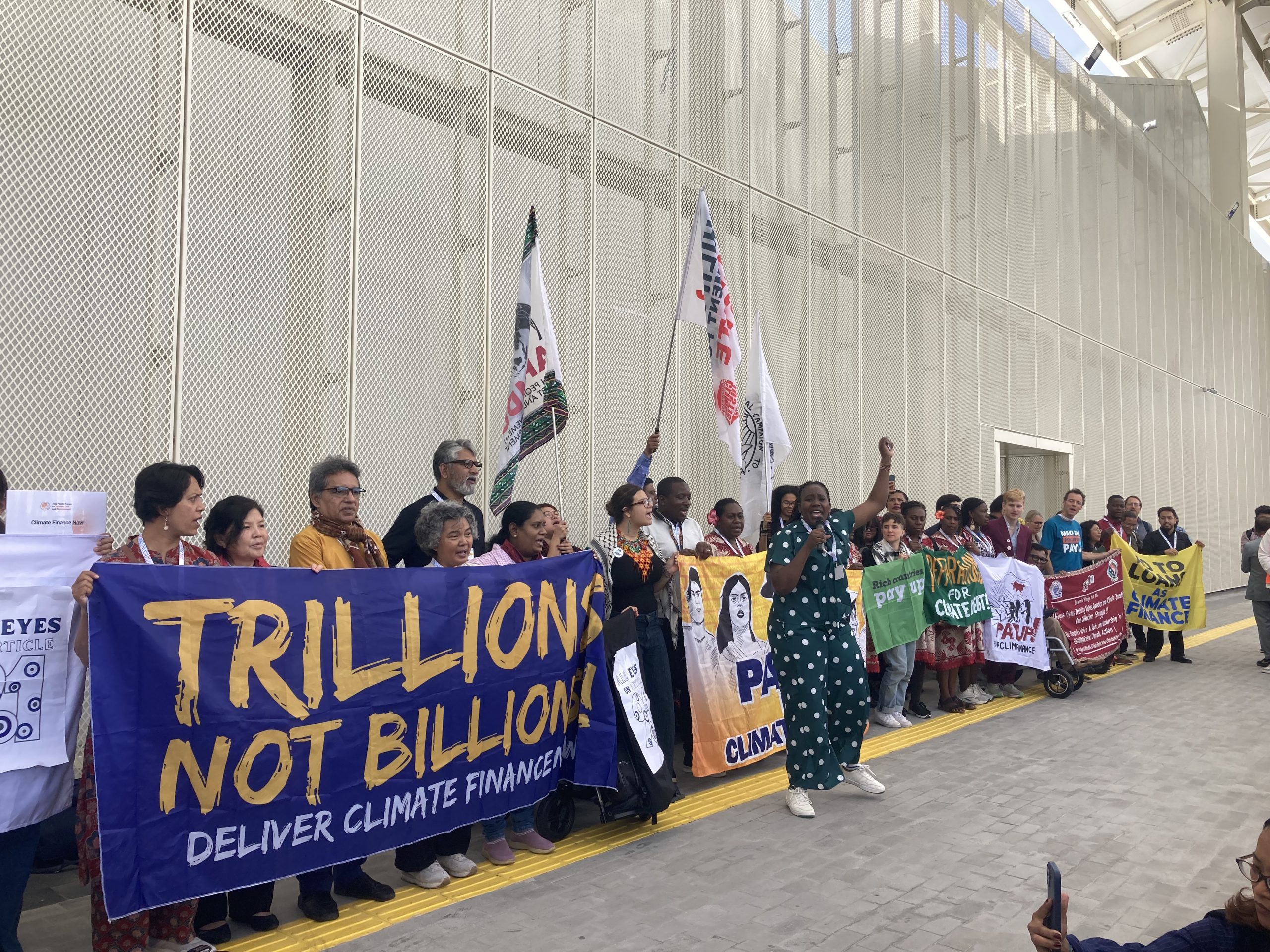
“And while we saw yesterday that only 50 million dollars was pledged, at the exact same time, developed countries were blocking any discussion on tripling adaptation finance,” said Pooja Dave of Climate Action Network International.
Harjeet Singh, Head of Global Engagement and Partnerships at CAN International, did not mince words either. “This goes against the principles of the Convention and the Paris Agreement,” he told Era Environnement late Wednesday afternoon in the COP corridors. He continued: “This is completely unacceptable because developed countries committed to continuing to provide money. Yet they are not doing so. That is why we have always said we need an automatic replenishment mechanism—because the Adaptation Fund is a fund without a replenishment cycle,” he noted.
Highlighting the human toll in climate-vulnerable nations, from Nepal to Malawi and Kenya, Singh warned that the lack of resources undermines the prevention of loss and damage. “What we are seeing is a total abdication of responsibility by developed countries, which must be called out.”
Since the start of the COP, developing countries have demanded the operationalization of the commitment made at the Belém COP. Under that pledge, annual adaptation finance is to triple to at least $120 billion by 2035. This demand, forged in Brazil, builds directly on Article 9.1 of the Paris Agreement. Observers also noted that, according to the United Nations Environment Programme (UNEP), current adaptation flows cover less than 30% of developing countries’ actual needs.
Domestic Urgency
For developed countries, reluctance to open new international aid lines stems from fiscal constraints and the management of multiple domestic crises. Speaking at Wednesday’s press conference, EU representatives defended their stance.
“Policymakers like us do not have the luxury of picking one challenge and asking the others to wait,” explained Wopke Hoekstra. The European Commissioner noted that governments must manage climate action alongside defense spending, economic stagnation, and industrial competitiveness, forcing European governments to balance their own adaptation and security needs against external commitments.
Spain exemplifies this dual agenda. On the front lines of Mediterranean heatwaves, prolonged droughts, and water scarcity, Madrid used the COP31 window to unveil its new National Climate Change Adaptation Work Program 2026–2030. Operationalizing Spain’s climate law, this roadmap coordinates 187 measures across 19 ministries and state agencies. It covers water management, agriculture, tourism, and industry, alongside cross-cutting programs on social and territorial vulnerability. Backed by more than 1,500 public and scientific inputs, the plan translates national policy into concrete administration.
At the same time, Spain stated it is assuming its share of responsibility by pledging €25 million to the Adaptation Fund in Antalya on Tuesday. Still, for some observers, European funding falls short, and the scale of such domestic planning underscores the difficulty of freeing up additional fiscal margin for international aid.
Brussels Rules Out “Fresh Money”
Taking diplomatic center stage following the United States’ withdrawal from the Convention and the Paris Agreement, the European Union defended its international track record while closing the door on new public budget mandates.
Hoekstra argued that the bloc remains the world’s largest provider of public climate finance, pointing to the €32.3 billion mobilized by the EU and its member states. Rather than negotiating new funding targets, he insisted COP31 must focus on implementation and removing bureaucratic bottlenecks that slow access to existing funds.
“The topic we must avoid is yet another discussion about fresh money. That will not resonate, and it is not something that will be resolved at this stage,” Hoekstra told the press. Recalling his previous tenure as a Dutch minister dealing with World Bank procedures after a Caribbean hurricane, he noted it took more than five years for an affected island to unlock reconstruction funds.
“How do we make this workable with all the necessary procedural safeguards to protect taxpayers’ money, while actually delivering for those who are hit again and again?”
Civil Society Accuses Brussels
Also speaking at Wednesday’s EU press conference, Member of the European Parliament Lídia Pereira echoed the same line. She called on partners to move from words to action and demanded proper tracking of existing commitments, stressing that other countries must step up their efforts too. For Hoekstra, those efforts should also come from private finance and development banks alongside public climate funds.
Civil society leaders sharply criticized Brussels’ posture. Taking aim at this stance, Singh argued that the bloc is replicating obstructionism historically associated with Washington.
“The EU has been horrible in these negotiations. The EU is behaving just like the United States. And because the masks have come off and they can no longer hide behind the US, they are doing exactly what the US used to do. They are not providing enough money, even if they say, yes, they provide the most, the fact is their fair share is far higher than what they offer. A quarter of cumulative emissions came from the European region. So they cannot say they are doing enough,” he told Era Environnement.
Another activist, Sahar Farheda of CSE India, dismissed the focus on “access” as a “divide and rule” tactic, one that favors Small Island Developing States and Least Developed Countries while sidelining other climate-impacted nations.
Carbon Markets
Faced with tight public fiscal margins, Norway is leaning on Article 6 of the Paris Agreement carbon credit trading to generate future revenues for climate adaptation.
During Tuesday’s high-level dialogue on the Adaptation Fund, the country spotlighted Article 6 carbon trading. It is emphasizing its shift toward operational implementation. Centralized carbon trading under Article 6.4 includes a mandatory 5% share of proceeds levy for the Adaptation Fund, the Norwegian delegation noted. Bilateral agreements under Article 6.2, however, carry no automatic levy, though Norway indicated the bulk of those proceeds would still go to the Adaptation Fund, while also highlighting its capacity-building work with partner countries.
“For many years, Article 6 of the Paris Agreement was expected to generate revenues for the Adaptation Fund. Those revenues have taken time to materialize… But we are now getting closer to concrete results,” the Norwegian delegate stated.
At COP31, Norway is advancing agreements covering 20 million tonnes of emission reductions within a broader portfolio, he explained. According to Oslo, a program starting in 2029 is part of efforts expected to double that portfolio in the coming years as Article 6 begins generating revenue.
Civil society, however, remains skeptical of market mechanisms. Dismissing carbon trading frameworks as insufficient, Singh insisted on the primacy of public finance. “What will work is regulation and putting money directly on the table—meaning public finance,” he told Era Environnement.
Stalled Talks
It remains to be seen whether market mechanisms like Article 6.2 commitment of the Paris Agreement and the presidency’s Divan diplomacy can overcome mistrust in Antalya. Beyond adaptation finance, talks remain deadlocked over establishing a permanent institutional mechanism for a Just Transition, a flagship outcome from Belém, activists point out. Women, gender, and labor constituencies are sounding the alarm, arguing that developed countries, notably the EU, the UK, Norway, and Japan are watering down its mandate. Critics warn it risks becoming a body with no decision-making power.
Ministers are holding closed-door consultations through Thursday evening. The central question in Antalya is clear. Can the Ottoman-inspired Divan deliver a unified package? Developing nations are demanding concrete finance. Donors refuse to cross their budget ceilings. With COP31 due to wrap up on Friday, both time and trust are running short, observers note.